Introduction
Many products transported every day by air are classified as dangerous goods. Although these shipments can be transported safely, they must comply with strict international regulations to protect passengers, crew members, aircraft and cargo.
Proper classification, packaging, documentation and labelling are essential before any dangerous goods shipment can be accepted for air transport.
What are dangerous goods?
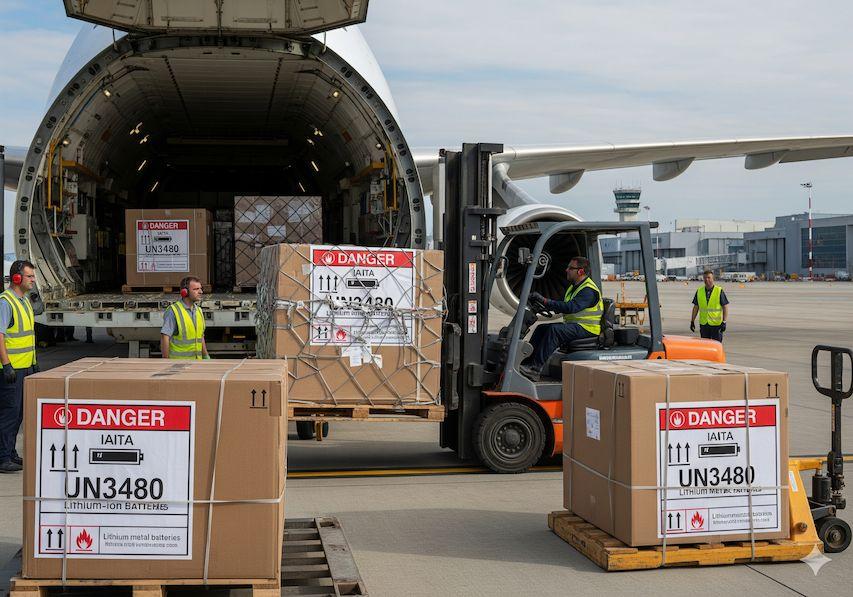
Dangerous goods are substances or articles capable of posing risks to health, safety, property or the environment during transportation.
Examples include lithium batteries, aerosols, flammable liquids, chemicals, gases, paints and certain medical products.
Expert Tip
Never assume a product is safe for air transport. Always verify its classification before booking a shipment, especially when batteries or chemicals are involved.
Classification of dangerous goods
International air transport regulations divide dangerous goods into several hazard classes according to the type of risk they present.
- Explosives
- Gases
- Flammable liquids
- Flammable solids
- Oxidizing substances
- Toxic substances
- Radioactive materials
- Corrosive substances
- Miscellaneous dangerous goods
Packaging and labelling
Dangerous goods must be packed using approved packaging that complies with international transport standards. Each shipment must also display the appropriate hazard labels and handling marks.
Incorrect packaging or missing labels may prevent airlines from accepting the cargo.
International regulations
Air transport of dangerous goods is regulated by internationally recognised standards that define classification, documentation, packaging, labelling and handling requirements.
Working with an experienced freight forwarder helps ensure shipments comply with all applicable regulations before departure.
Key Takeaways
- Dangerous goods require special handling.
- Proper packaging and labelling are mandatory.
- Documentation must be complete before shipping.
- Compliance helps prevent delays and rejected cargo.
FAQ
Can lithium batteries be shipped by air?
Yes, but specific packaging, quantity limits and documentation requirements apply depending on the battery type.
Who determines whether goods are dangerous?
Manufacturers generally provide Safety Data Sheets (SDS), which help determine the correct dangerous goods classification.
Can 3C Express organise dangerous goods shipments?
Yes. 3C Express can assist customers with compliant air freight solutions for eligible dangerous goods shipments.
Need help shipping dangerous goods?
Our logistics specialists can guide you through documentation, packaging requirements and compliant international air transport.
Request a Quote