Introduction
International air freight requires accurate documentation to ensure smooth transportation, customs clearance and delivery. Missing or incorrect paperwork can create delays, inspections, storage charges and additional communication between all parties involved.
This guide explains the main documents used in air cargo operations and why each one is important for importers, exporters and logistics teams.
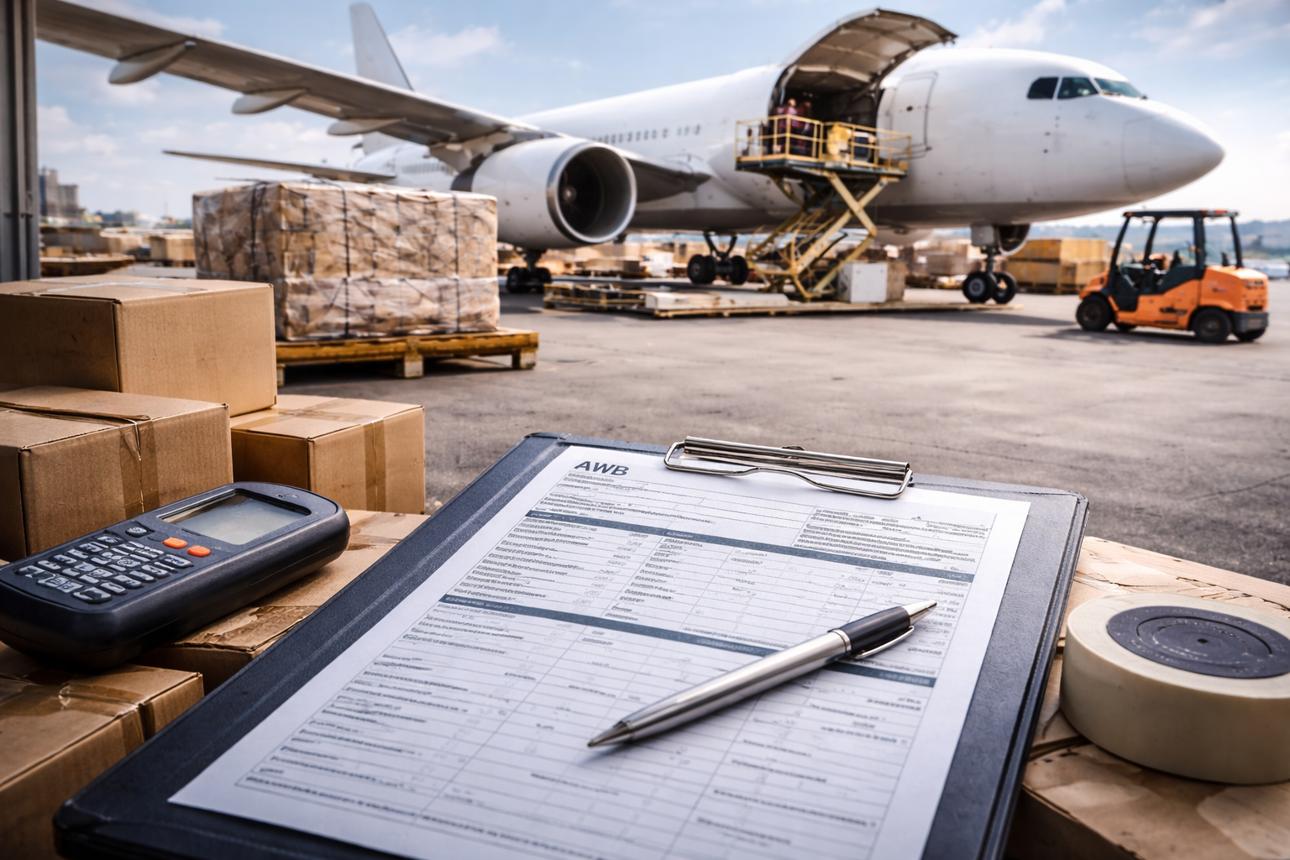
Essential documents for air cargo
The exact documentation required depends on the origin, destination, type of goods and customs regulations. However, most international air freight shipments require a core set of documents.
- Air Waybill: transport document used to identify and track the shipment.
- Commercial Invoice: document used for customs valuation and trade details.
- Packing List: document showing package quantity, weight and dimensions.
- Certificate of Origin: sometimes required to confirm where goods were produced.
- Special permits: may be required for regulated or restricted goods.
Expert Tip
Always verify that the shipper, consignee, invoice value, HS code, package details and Incoterm are consistent across every document. Even small discrepancies can delay customs clearance.
Air Waybill
The Air Waybill, often called AWB, is one of the most important air freight documents. It acts as a transport document and contains key information about the shipment, including shipper, consignee, origin, destination, routing and cargo details.
Unlike a Bill of Lading used in sea freight, an Air Waybill is generally not a document of title. Its main role is to identify the shipment and support transportation and tracking throughout the air cargo process.
Commercial invoice
The commercial invoice is essential for customs clearance. It provides information about the seller, buyer, goods description, value, currency, HS code, Incoterm and country of origin.
Customs authorities use this document to assess duties, taxes and import formalities. Inaccurate values or vague product descriptions may lead to customs questions or delays.
Packing list
The packing list provides operational details about how the goods are packed. It usually includes the number of packages, package type, gross weight, net weight, dimensions and marks or references.
This document helps airlines, freight forwarders, customs officers and warehouse teams verify cargo details and handle the shipment correctly.
Key Takeaways
- The Air Waybill identifies and tracks the air cargo shipment.
- The commercial invoice is essential for customs valuation.
- The packing list helps verify weight, dimensions and package details.
- Consistent documentation helps reduce delays and customs issues.
FAQ
Which document is the most important for air freight?
The Air Waybill, commercial invoice and packing list are all important because they serve different purposes during transportation and customs clearance.
What happens if a document is missing?
The shipment may be delayed, inspected or held until the required documentation is provided and verified.
Can 3C Express assist with air cargo documentation?
Yes. 3C Express can help customers prepare and verify the documents required for international air freight shipments from and to France.
Need assistance preparing your shipping documents?
Our logistics specialists can help ensure your air cargo documentation is complete, consistent and ready for customs clearance.
Request a Quote